

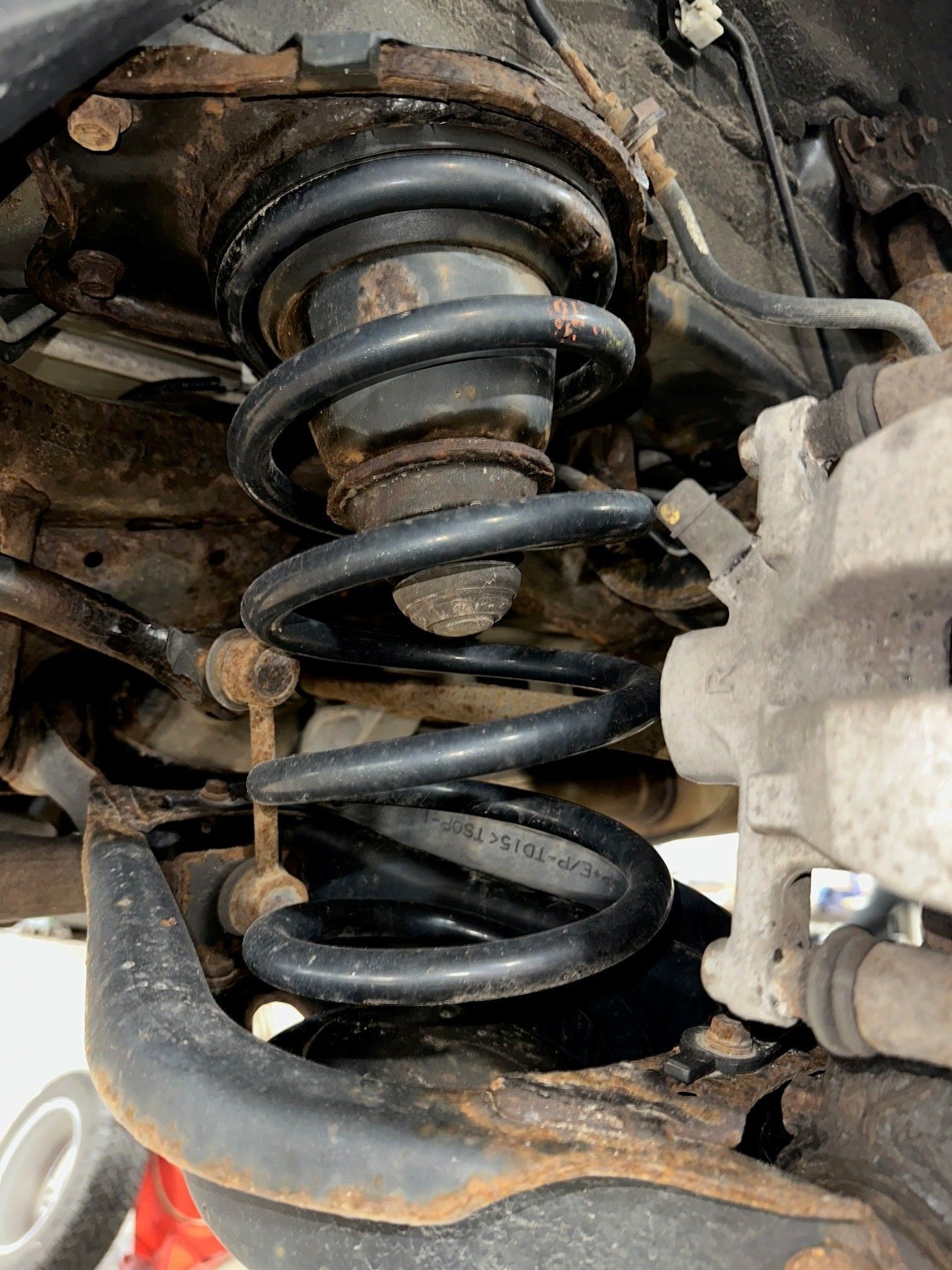
If you’re asking this question, there’s a good chance your vehicle doesn’t feel quite right. Maybe it’s sitting unevenly in the driveway, making a strange noise over bumps, or just riding rougher than usual. These are the kinds of concerns we hear every day at the shop and suspension springs are often part of the story.
Let’s walk through what broken springs actually look like, what causes them to fail, and how to recognize the signs before they lead to bigger problems.
What Are Suspension Springs, and What Do They Do?
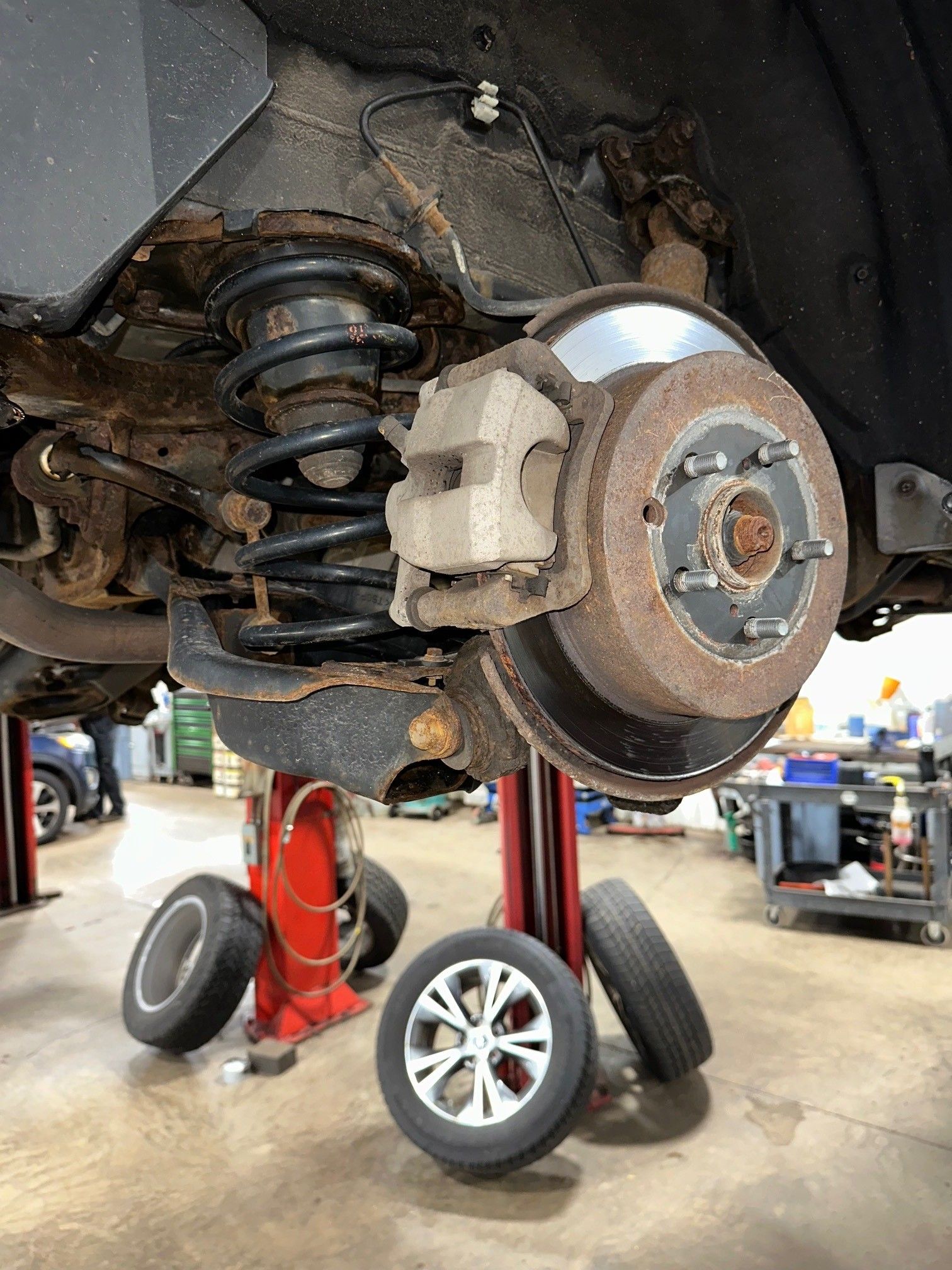
Your vehicle’s springs, usually coil springs in most cars and SUVs, are part of the suspension system. Their job is to support the weight of the vehicle and absorb bumps in the road, so your ride stays controlled and comfortable.
When everything is working properly, you don’t think about them. But when a spring breaks, it changes how the vehicle sits, handles, and responds.
What a Broken Spring Looks Like
In some cases, you can actually see the damage- especially if it’s severe.
Here’s what we typically find during an inspection:
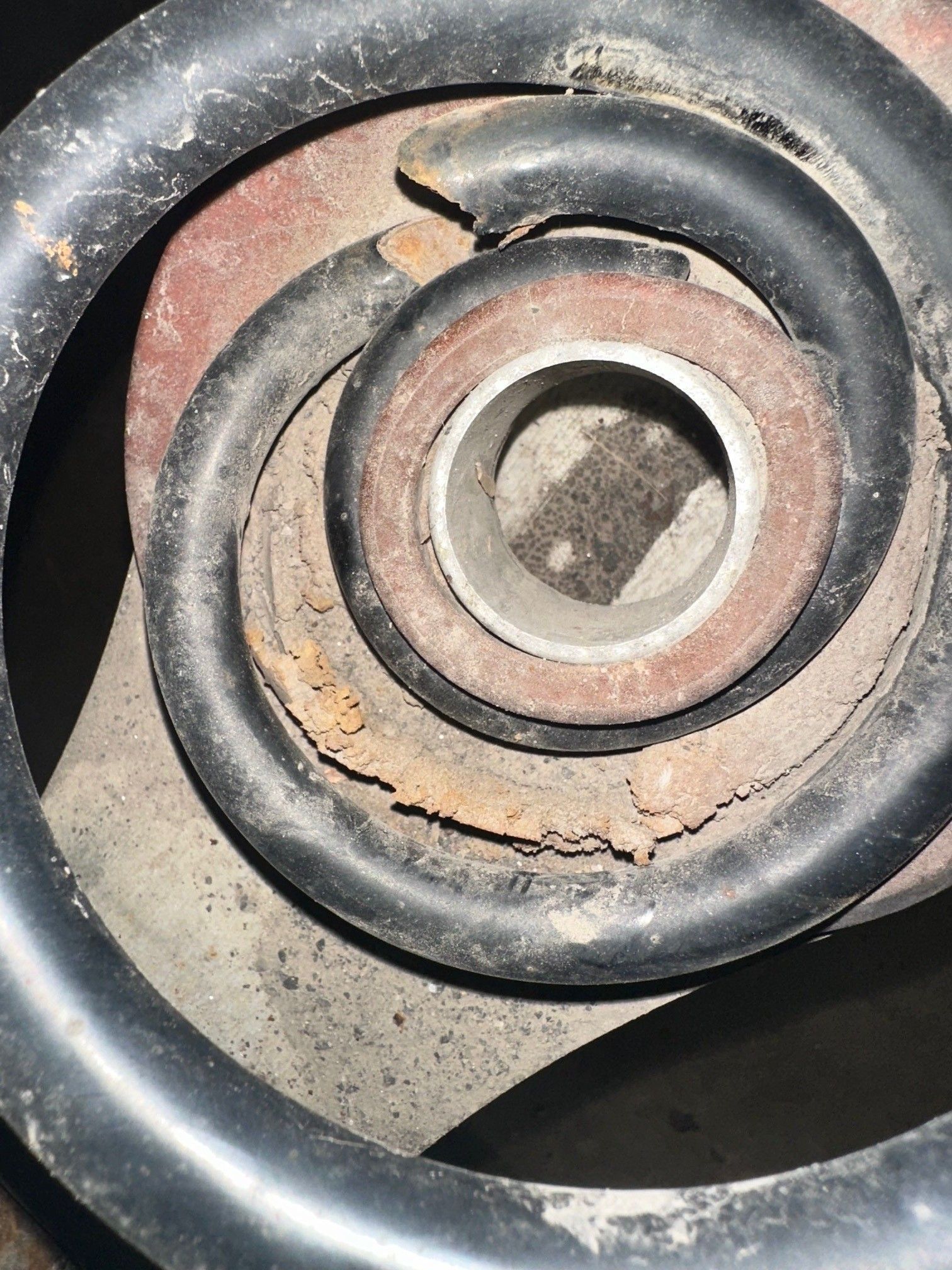
- A visible crack or complete break in the coil
The spring may be split into two pieces, often near the top or bottom where stress is highest.
- A missing section of the spring
Sometimes a piece snaps off and falls away entirely. We’ve had customers come in with part of the coil just… gone.
- The spring sitting out of place
If the break shifts the spring, it may no longer sit correctly in its mount.
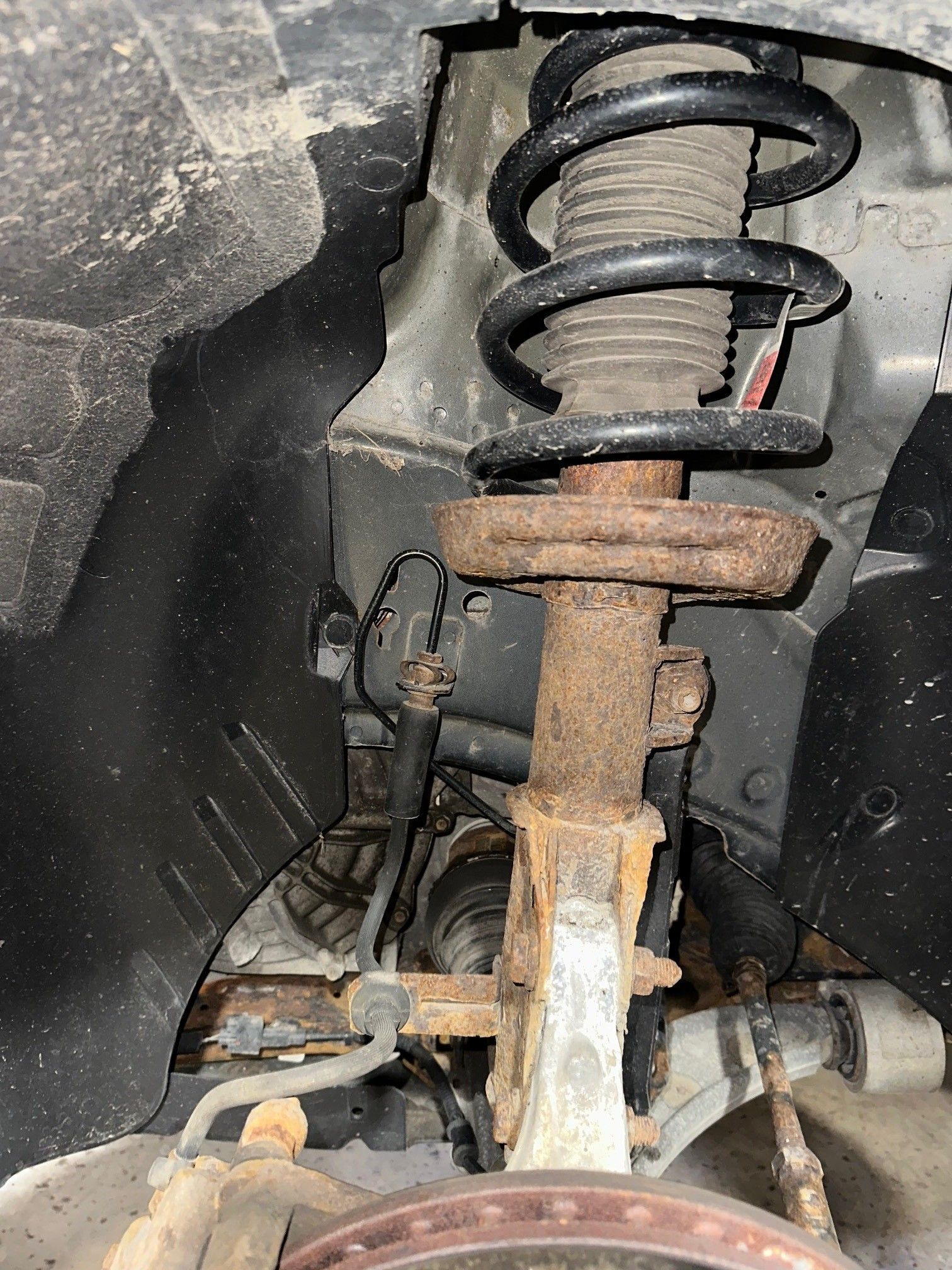
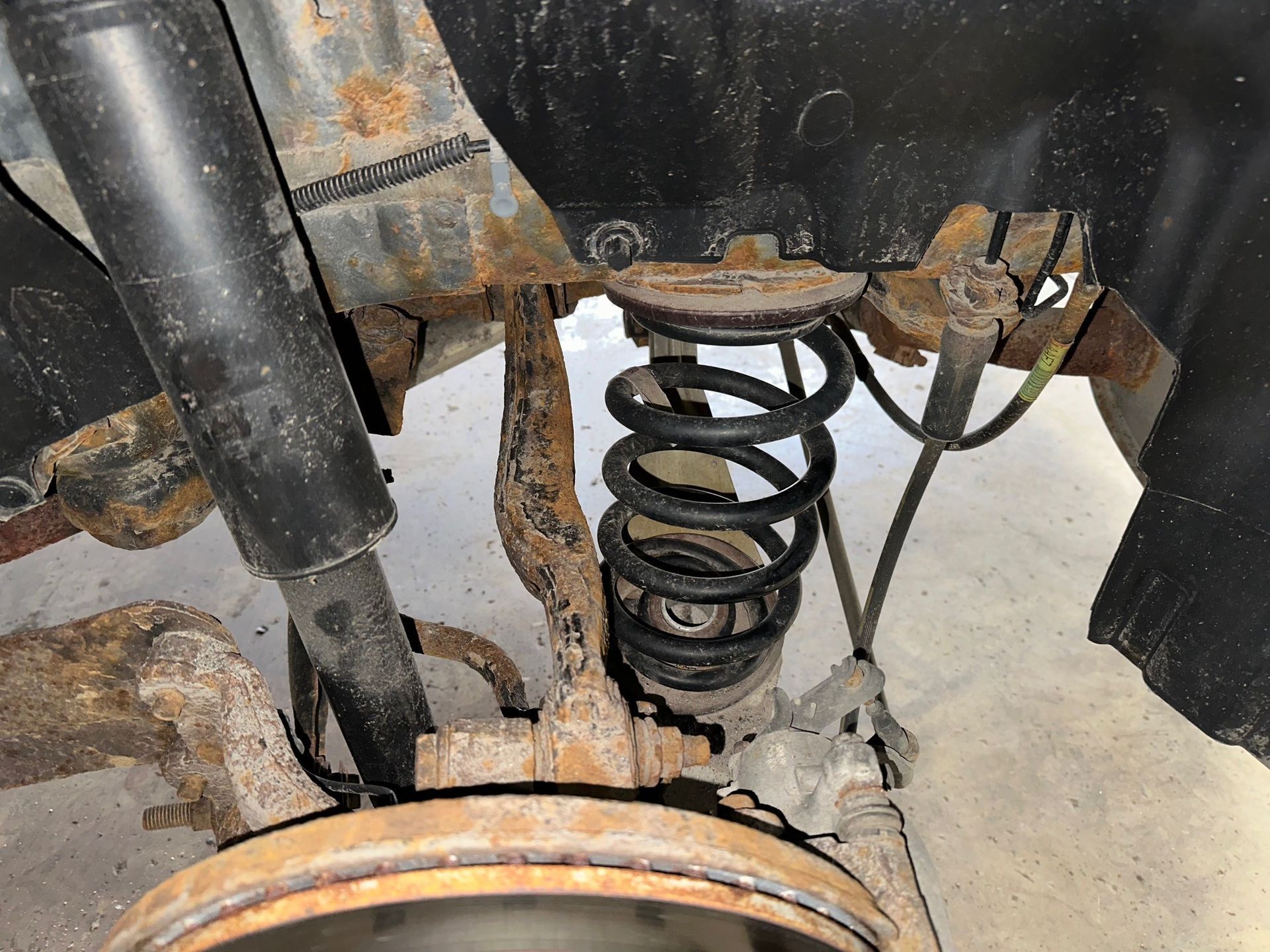
- Rust buildup and thinning metal
Even before a break happens, springs often show heavy corrosion, especially in areas with road salt. That rust weakens the metal over time.
In many cases, the break isn’t obvious unless the vehicle is lifted. That’s why symptoms matter just as much as what you can see.
Why Springs Break
Springs are built to last a long time, but they’re under constant pressure- literally holding up thousands of pounds every day.
Here are the most common reasons we see them fail:
- Corrosion from road salt and moisture
This is the number one cause in our area. Rust eats away at the metal until it can’t handle the load anymore.
- Age and fatigue
Over time, the metal weakens from repeated compression and rebound.
- Potholes or hard impacts
A sharp hit can snap an already weakened spring.
- Overloading the vehicle
Carrying more weight than the suspension is designed for can add extra stress.
A lot of customers are surprised when a spring breaks “out of nowhere.” In reality, it’s usually been weakening for a while.
Common Symptoms You Might Notice
Most drivers don’t spot the spring itself, they notice how the vehicle feels or sounds.
Here are the signs we hear about most often:
- Vehicle leaning or sitting unevenly
One corner may appear lower than the others.
- Clunking or snapping noises
Especially when turning or going over bumps.
- Rough or bouncy ride
The vehicle may feel less stable or more jarring than usual.
- Tire wear issues
A broken spring can throw off alignment, leading to uneven wear.
- Steering feels off
The vehicle might pull slightly or feel less predictable.
One thing we see a lot: customers assume it’s a strut or shock issue because of the ride quality. Sometimes it is but just as often, the spring is the root cause.
Why Proper Diagnosis Matters
Springs don’t work alone. They’re part of a system that includes shocks or struts, control arms, and other components. When one part fails, it can affect the others.
For example:
- A broken spring can damage a tire if a sharp edge contacts the sidewall.
- It can put extra stress on the strut, leading to premature wear.
- It may affect alignment, which impacts handling and safety.
That’s why we always recommend a full suspension inspection rather than replacing parts based on guesswork.
A Few Practical Insights from the Shop
Over the years, we’ve noticed some consistent patterns:
- Breaks often happen in colder months due to salt exposure and temperature swings.
- Rear springs tend to go unnoticed longer because the symptoms can be subtler.
- Many vehicles come in with both springs worn, even if only one is broken.
That last point matters—springs are usually replaced in pairs (left and right) to keep the vehicle balanced.
What Should You Do If You Suspect a Broken Spring?
If any of the symptoms above sound familiar, it’s worth having the vehicle checked sooner rather than later. Even if the car still feels drivable, a broken spring can affect safety, tire wear, and overall handling.
The good news is that once identified, the repair is straightforward, and catching it early can prevent additional damage.
A broken spring isn’t always obvious at a glance, but your vehicle will usually give you clues if something isn’t right. Uneven ride height, unusual noises, or a rough ride are all worth paying attention to.
If you’re noticing any of these signs, scheduling a quick suspension inspection can give you clear answers and peace of mind. It’s a simple step that helps keep your vehicle safe, stable, and predictable on the road.
Need your springs checked? We can help! Lou's Car Care & Fleet Services has been proudly serving Baldwinsville, NY, and surrounding communities since 1976. Call us or schedule your next appointment online today!
Let's Connect! Click on the links below to stay in touch with the Lou's Car Care Community: