

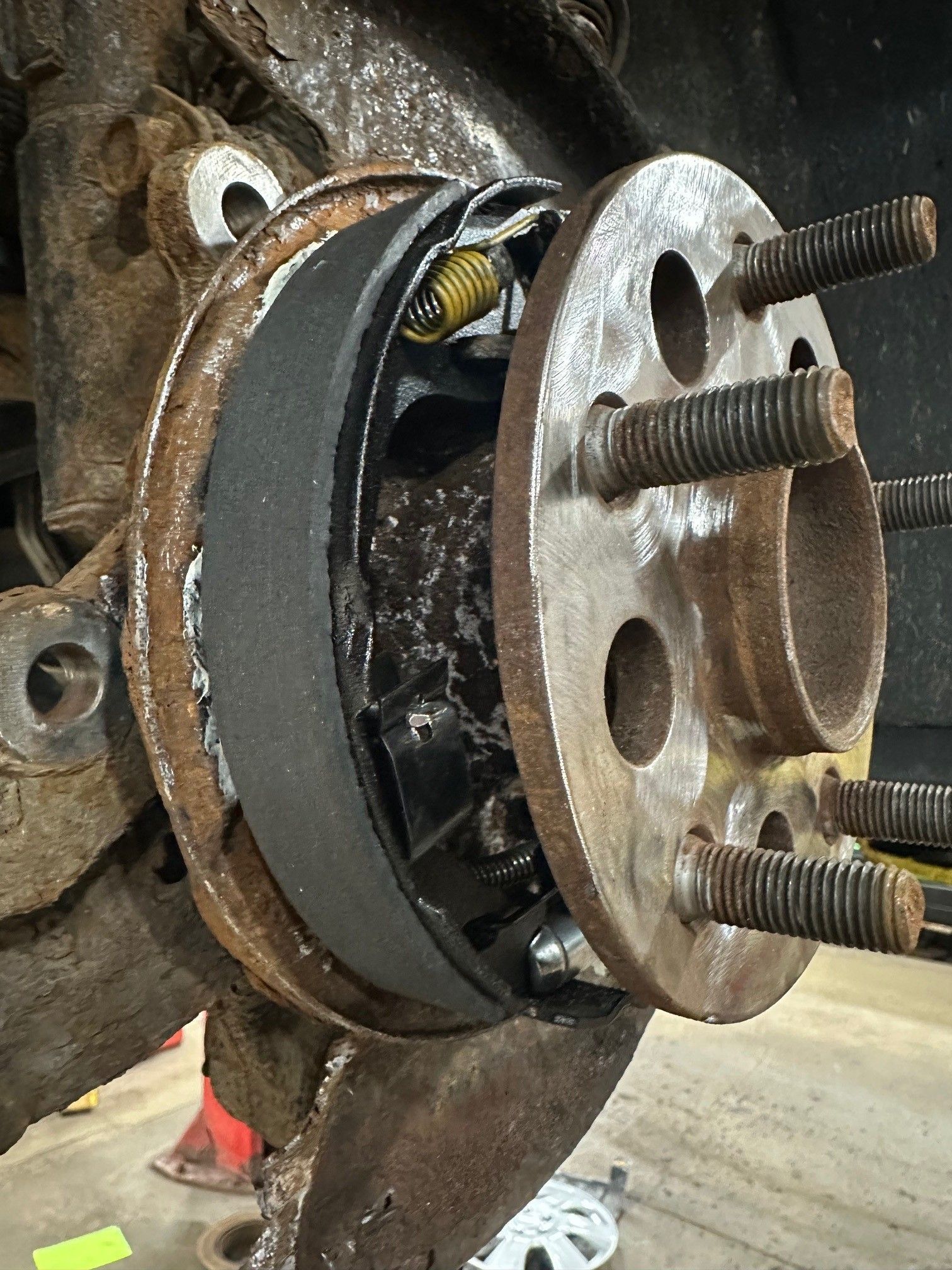
If you’ve ever set your parking brake and expected the vehicle to stay put on a hill, in a driveway, or while loading- you’re relying on a part most people never think about: the parking brake shoes.
We get questions about these fairly often, usually when something doesn’t feel right. Maybe the vehicle rolls a little when parked, or the brake pedal feels normal, but the parking brake doesn’t hold like it used to. Let’s walk through what parking brake shoes are, how they work, and what we look for when something seems off.
What Parking Brake Shoes Actually Do
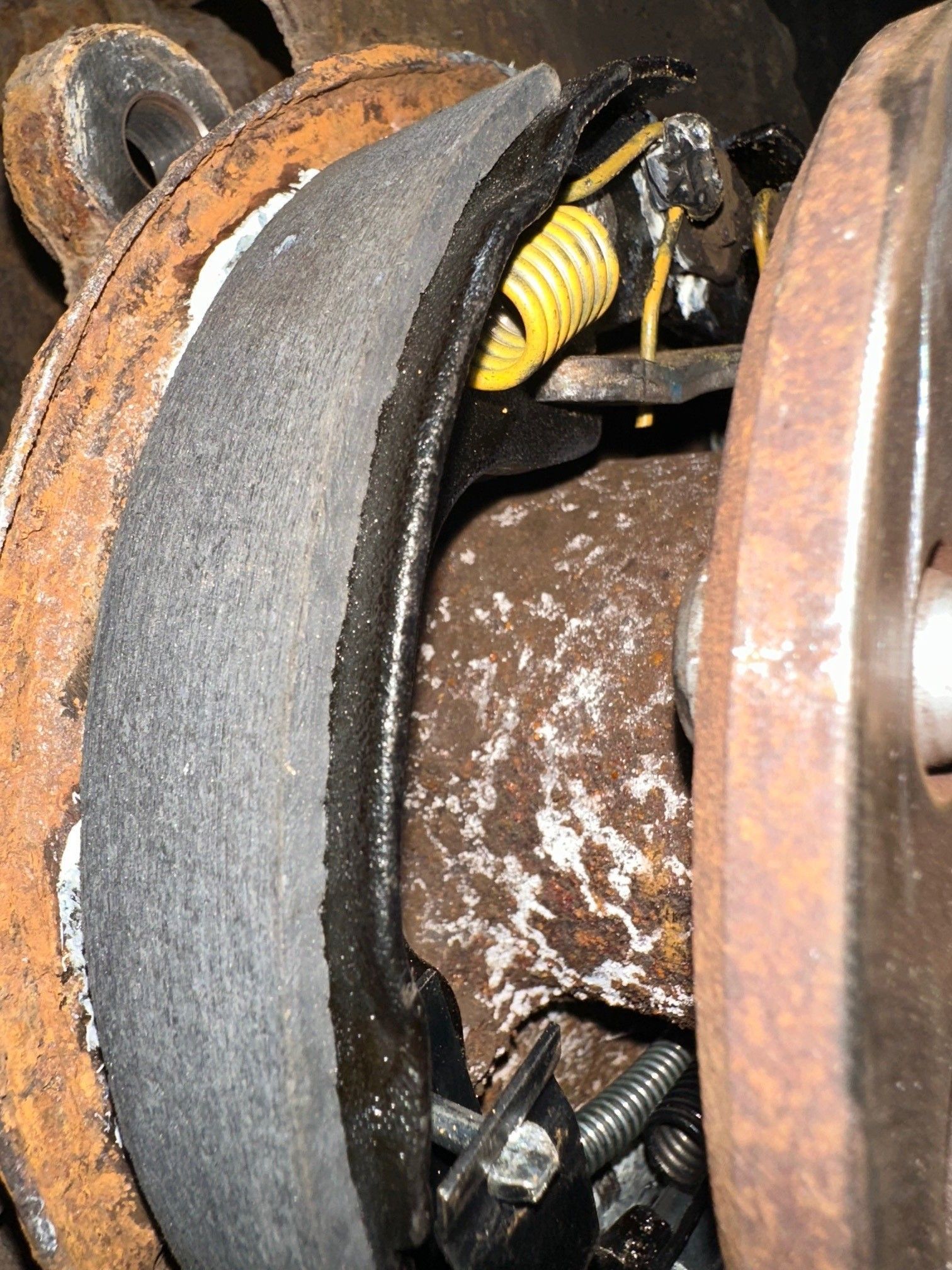
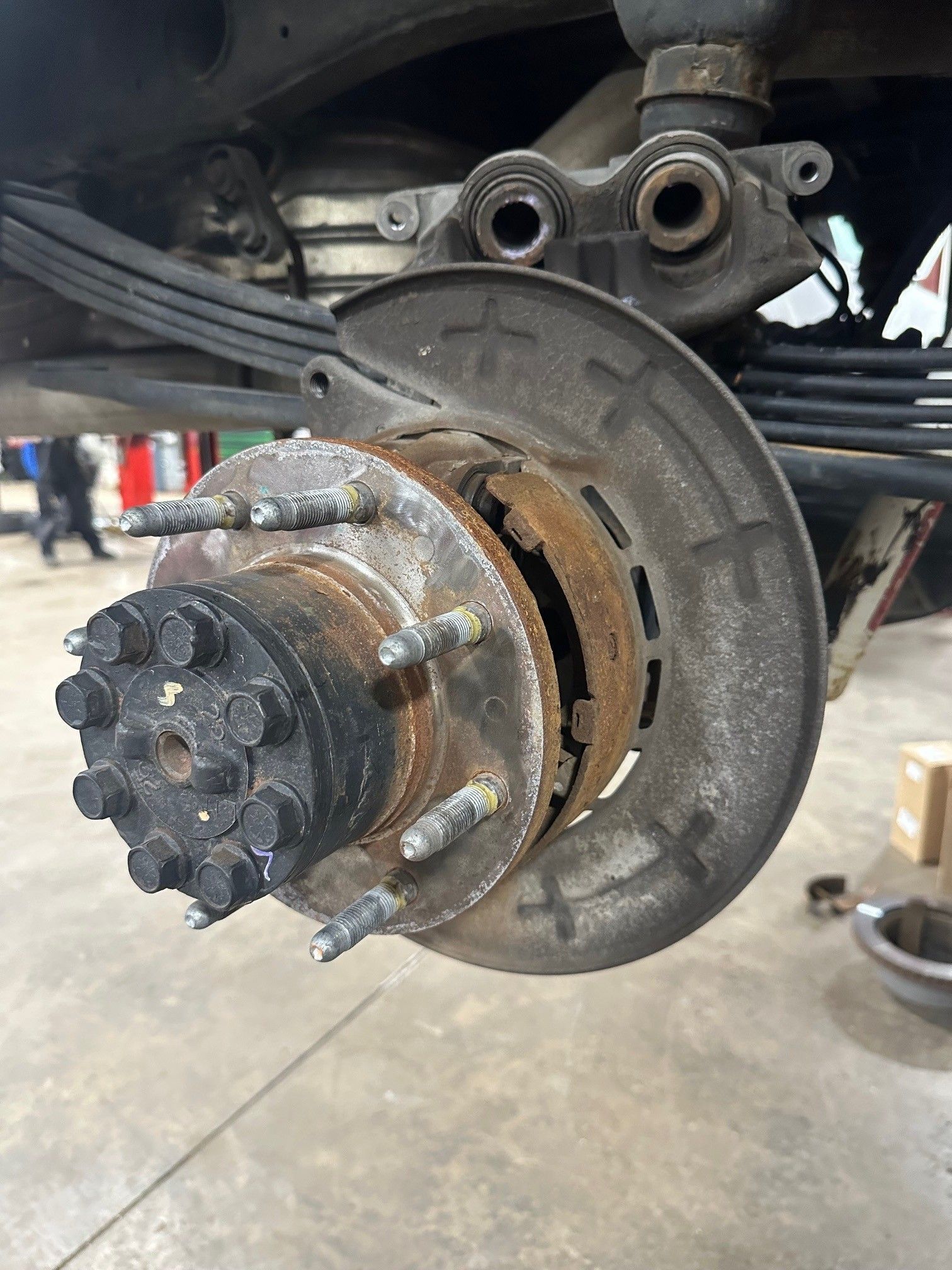
Parking brake shoes are small, curved friction components located inside the rear brake assembly on many vehicles, especially those with rear disc brakes.
Even if your vehicle has disc brakes, the parking brake often uses a separate drum-style system built inside the rear rotor.
Inside that setup are the parking brake shoes. When you engage the parking brake, either with a lever, pedal, or electronic switch- those shoes press outward against a small drum surface inside the rotor. That pressure holds the vehicle in place.
It’s a simple, mechanical system. No hydraulics involved like your regular brakes. Just cables, levers, and friction.
Why Parking Brake Shoes Wear Out or Fail
Like any braking component, parking brake shoes wear down over time. But interestingly, we often see the opposite problem too. They wear out because they’re not used enough.
Here are the most common reasons we see issues:
1. Lack of Use
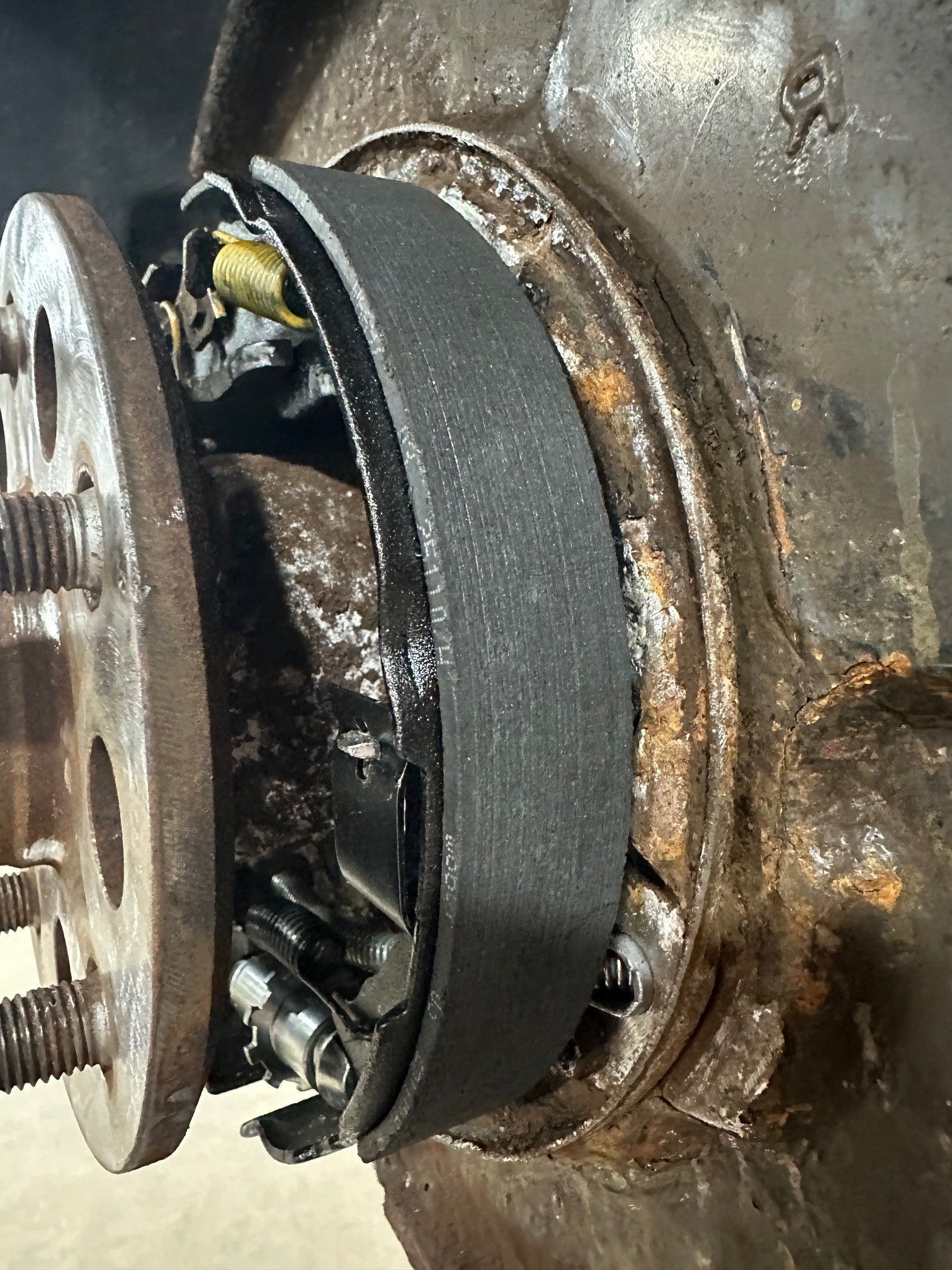
If the parking brake isn’t used regularly, the components can seize or corrode. The shoes may not move freely when needed.
2. Corrosion and Rust
Especially in areas with moisture, road salt, or infrequent use, rust can build up inside the brake assembly. That affects how the shoes contact the drum.
3. Misadjustment
Parking brake systems need to be properly adjusted. If they’re too loose, they won’t hold. Too tight, and they can drag or wear prematurely.
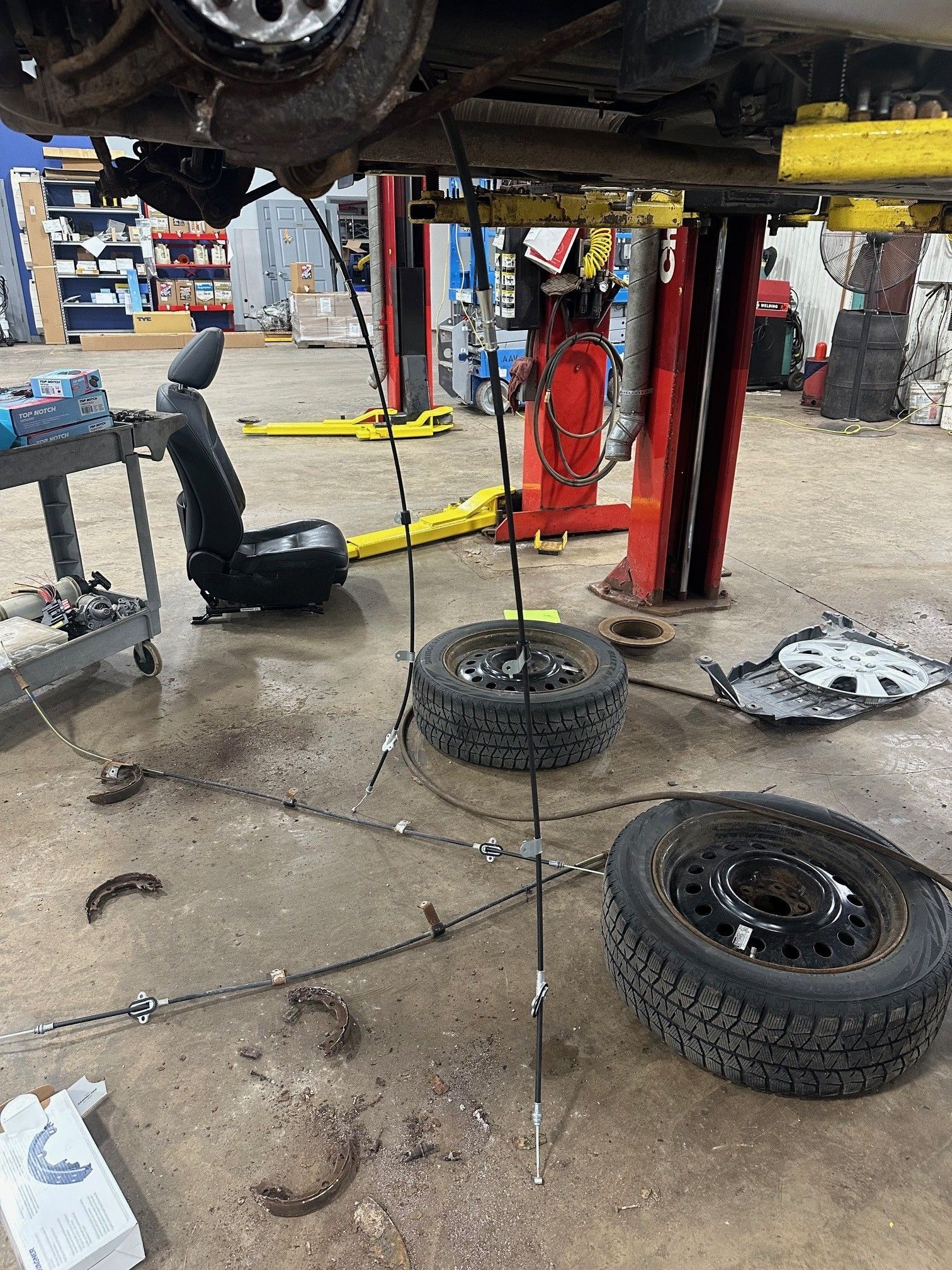
4. Cable Issues
The cables that activate the parking brake can stretch, bind, or seize. Sometimes the issue isn’t the shoes at all- it’s the system that controls them.
Common Symptoms Drivers Notice
Most people don’t think about their parking brake until it stops doing its job. When it does, the signs are usually pretty clear:
- The vehicle rolls slightly after parking
- The parking brake needs to be pulled much higher or pushed further than before
- The brake doesn’t hold on an incline
- A dragging or scraping noise from the rear wheels
- In some cases, a burning smell if the shoes are stuck and dragging
One thing we hear often is, “My regular brakes feel fine, so it can’t be a brake issue.” That’s a common misunderstanding. The parking brake system is separate, so it can have problems even when your main brakes are working normally.
Why Proper Diagnosis Matters
Parking brake problems can seem straightforward, but they’re not always as simple as replacing worn shoes.
In the shop, we’re looking at the whole system:
- Are the shoes worn or contaminated?
- Is the hardware (springs, clips, adjusters) functioning properly?
- Are the cables moving freely?
- Is there internal damage inside the rotor drum?
Sometimes the shoes look fine, but the cable is seized. Other times, corrosion inside the drum prevents proper contact. Replacing parts without identifying the root cause can lead to the same issue coming back.
What We See in the Shop
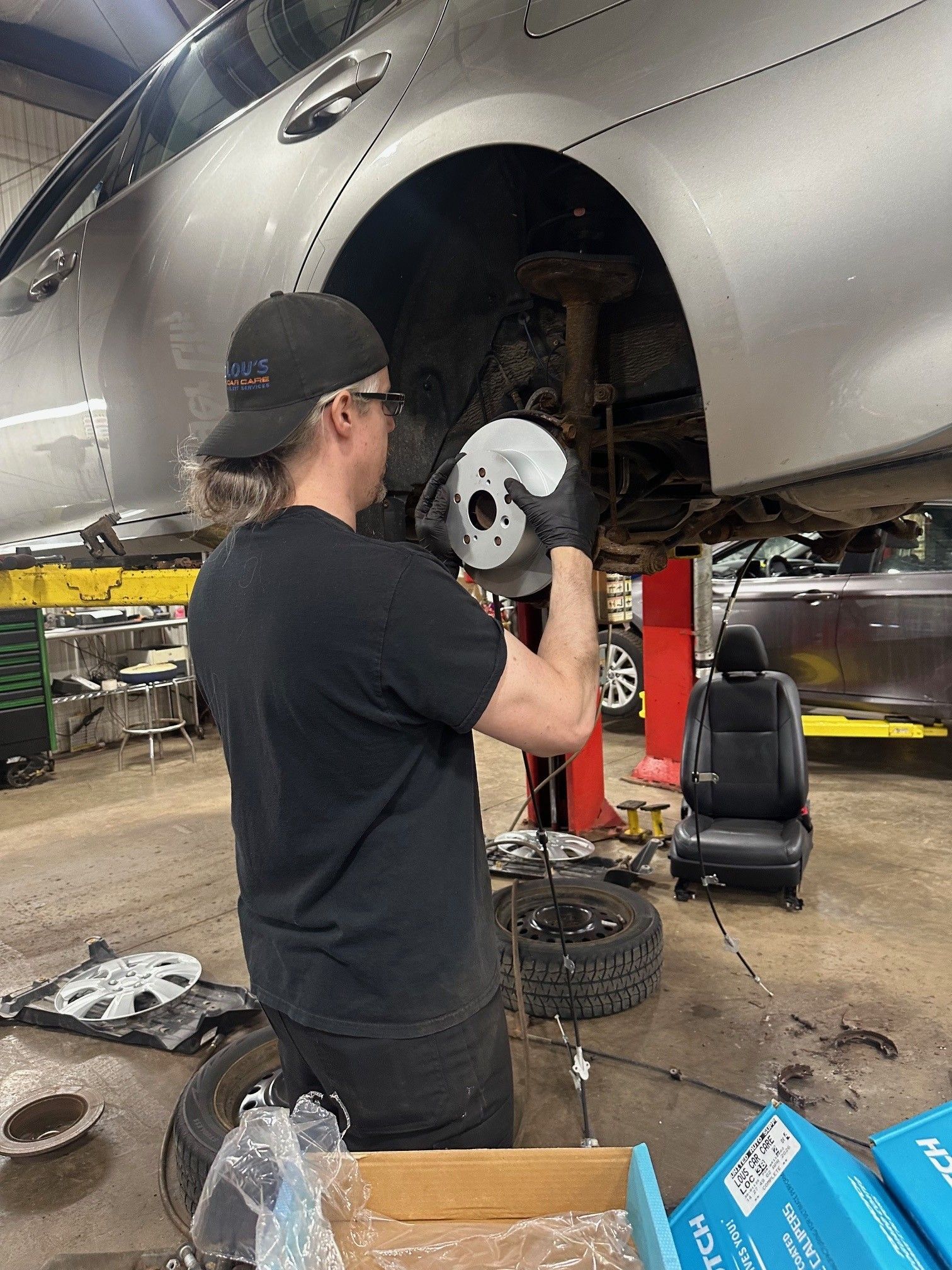
A pattern we see often: vehicles that rarely use the parking brake tend to have more issues with it.
It seems counterintuitive, but using the parking brake regularly helps keep everything moving and adjusted. When it sits unused, components can stick or lose effectiveness over time.
We also see cases where a customer notices the brake isn’t holding well and assumes it’s minor, until the vehicle rolls or fails to stay secure on a slope. That’s when it becomes more than just an inconvenience.
A Practical Tip
If your vehicle has a manual parking brake (lever or pedal), using it regularly (even on flat ground) can help keep the system functioning properly.
And if you notice it’s not holding like it used to, that’s usually the first sign something needs attention.
When It’s Worth Having It Checked
If your parking brake:
- Doesn’t hold the vehicle securely
- Feels loose or requires extra travel
- Makes unusual noises
- Or hasn’t been inspected in a while
…it’s a good idea to have it looked at.
A quick inspection can usually determine whether it’s a simple adjustment or something that needs repair. Either way, it gives you peace of mind that your vehicle will stay where you put it.
If you’ve been noticing any of these symptoms or just aren’t sure if your parking brake is working the way it should, scheduling an inspection can help you get clear answers and avoid bigger issues down the road.
Does your fleet vehicle need new parking brake shoes? We can help! Lou's Car Care & Fleet Services has been proudly serving Baldwinsville, NY, and surrounding communities since 1976. Call us or schedule your next appointment online today!
Let's Connect! Click on the links below to stay in touch with the Lou's Car Care Community: